Joint pain and injuries can disrupt your routine and limit your mobility, making even simple tasks challenging. One of the most advanced treatment options available today is arthroscopy surgery—a minimally invasive procedure designed to diagnose and treat joint conditions such as ligament tears, cartilage damage, and persistent joint pain.
Unlike traditional open surgery, arthroscopy involves small incisions, resulting in reduced pain, quicker healing, and faster recovery. In this guide, we’ll walk you through the arthroscopy procedure, highlight its key benefits, and explain what you can expect during your recovery journey—helping you make informed decisions when choosing the Best Orthopedic Surgeon in Ahmedabad.
What Is Arthroscopy?
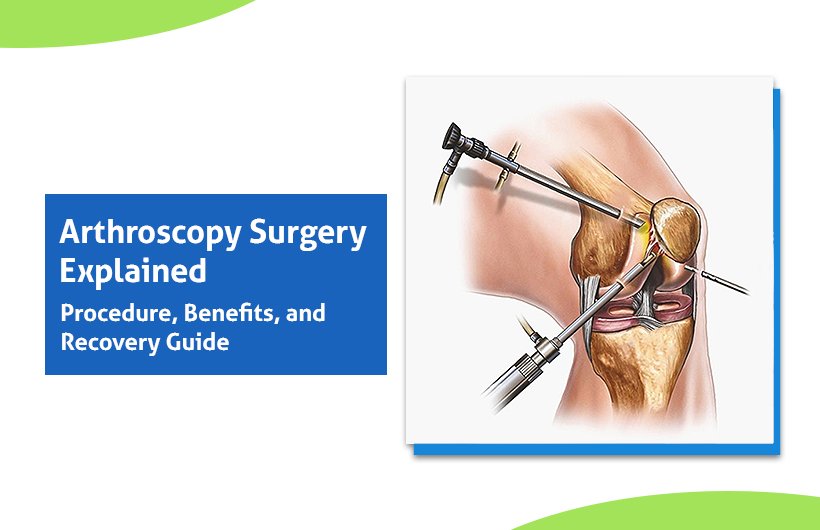
Arthroscopy surgery is a minimally invasive surgical technique where an orthopaedic surgeon uses a thin, flexible tube equipped with a high-definition camera (called an arthroscope) to look inside a joint.
This allows the surgeon to see a detailed, magnified view of the joint structures on a monitor. It is most performed on the:
- Knee and Hip
- Shoulder and Elbow
- Ankle and Wrist
Types of Arthroscopies
Depending on the joint being treated, the procedure is specialized to address specific anatomical needs:
- Knee Arthroscopy: Often used for meniscus repairs or ACL reconstruction.
- Shoulder Arthroscopy: Ideal for rotator cuff repairs or treating recurrent dislocations.
- Hip Arthroscopy: Hip arthroscopy treats labral tears, FAI, cartilage, synovium, loose bodies.
- Ankle Arthroscopy: Used to remove loose bone fragments or repair labral tears.
Common Conditions Treated with Arthroscopy
This procedure is usually recommended when non-surgical treatments—like medications, physiotherapy, or rest—do not provide sufficient relief. Common issues include:
- Torn ligaments (such as ACL or MCL injuries).
- Cartilage damage or meniscus tears.
- Joint inflammation or persistent swelling (synovitis).
- Loose bone or cartilage fragments floating in the joint.
- Shoulder impingement or instability.
For patients in Ahmedabad experiencing limited mobility, Dr. Samip Sheth often recommends arthroscopy as an effective solution to restore full joint function.
How Should I Prepare for Arthroscopic Surgery?
Preparation is key to a smooth surgical experience:
Medical Clearance
Share your full medical history and current medications with your surgeon.
Fasting
You will likely be asked to fast (no food or water) for several hours before the procedure.
Physical Prep
Arrange for a ride home, as you will not be able to drive immediately following anesthesia.
What Happens During the Arthroscopy Surgery Procedure?
Understanding the step-by-step process can help reduce anxiety. The entire procedure usually takes about 1–2 hours, and most patients return home the same day.
Step 1: Anaesthesia
You will receive local, regional, or general anesthesia depending on the complexity of the surgery.
Step 2: Small Incisions
The surgeon makes tiny “keyhole” cuts (usually less than 1 cm) near the affected joint.
Step 3: Insertion of Arthroscope
The camera is inserted, displaying real-time images on a surgical screen.
Step 4: Joint Examination
The surgeon explores the joint to identify the exact source of pain or damage.
Step 5: Treatment
Small tools are inserted through other tiny incisions to repair torn tissues, remove damaged cartilage, or correct alignment.
Step 6: Closure
The incisions are closed with small stitches or adhesive strips and bandaged.
What Are the Benefits of Arthroscopy Surgery?
The shift toward minimally invasive surgery has occurred for a reason. The arthroscopy surgery benefits include:
- Minimally Invasive: Smaller cuts mean significantly less damage to surrounding muscles and tissues.
- Faster Recovery: Most patients return to daily activities and work much sooner than with open surgery.
- Less Pain: Post-operative discomfort is manageable and typically short-lived.
- Minimal Scarring: The “keyhole” incisions leave very small, often unnoticeable scars.
- Lower Risk: There is a reduced risk of infection and surgical complications.
What Is the Recovery Process After Arthroscopy Surgery?
While recovery is faster than traditional methods, following your surgeon’s protocol is essential for long-term success.
Immediate Recovery (First few days)
- Expect mild pain and swelling.
- Use the R.I.C.E. method: Rest, Ice, Compression, and Elevation.
- Keep the surgical site clean and dry.
Short-Term Recovery (1–3 weeks)
- Begin light movement and prescribed exercises.
- You may require crutches or a brace to protect the joint.
- Most “desk-job” professionals can return to work within a few days.
Long-Term Recovery (4 weeks+)
- Physical therapy is crucial. This helps you regain strength, range of motion, and flexibility.
- Gradual return to sports or heavy physical labour.
When Should You Consider Arthroscopy Surgery?
Consult an orthopedic surgeon near you if:
- Your joint pain does not improve with rest or physical therapy.
- You experience “locking” or “catching” in your joint.
- Imaging tests (MRI/X-ray) show structural damage.
- A sports injury has compromised your stability.
A Note from Dr. Samip Sheth Orthopaedic Surgeon in Ahmedabad
Arthroscopy has transformed modern joint care, allowing an Arthroscopy and Joint Replacement Surgeon to treat injuries with greater accuracy while preserving healthy tissue. The focus is always on minimally invasive techniques that support faster recovery and help patients return to active, pain-free living with confidence. Acting early makes a significant difference—addressing symptoms before they progress can prevent long-term limitations.
If joint pain is affecting your daily life, it’s worth seeking expert guidance. Consulting a skilled specialist like Dr Samip Sheth can help determine whether arthroscopy is the most effective path toward restoring your mobility and quality of life.