Weak knees can limit your daily activities, make climbing stairs difficult, and increase your risk of injuries. Whether you are recovering from a minor knee issue or aiming to prevent future problems, strengthening your knees is crucial. In this guide, we share effective knee strengthening exercises that can help improve stability, reduce pain, and protect your joints. Dr. Samip Sheth, a trusted Knee specialist in Ahmedabad, explains these exercises in simple language so you can follow them at home safely.
Why Do Weak Knees Happen?
Before we dive into exercises, it’s important to understand why knees become weak:
- Lack of physical activity – Muscles that support the knee become weak.
- Injury or surgery recovery – Muscles need time and exercise to regain strength.
- Ageing – Natural wear and tear can reduce muscle support.
- Muscle imbalance – Tight or weak muscles around the knee can cause instability.
- Excess weight – More pressure on the knee joints.
Weak knees can lead to pain, swelling, and increased risk of injury. But the good news is that targeted exercises can make a big difference.
How Do Knee Strengthening Exercises Help?
Knee strengthening exercises help by:
- Building the muscles around the knee (like quadriceps and hamstrings).
- Improving balance and joint stability.
- Reducing stress on the knee joint.
- Enhancing flexibility.
- Preventing injuries during everyday activities or sports.
If you have a history of knee pain or injury, it’s best to consult an Orthopaedic Doctor in Ahmedabad, like Dr Samip Sheth, before starting any exercise program.
Everyday Questions About Knee Strengthening
1. What Are the Best Exercises to Strengthen Weak Knees?
Here are some of the most effective knee strengthening exercises you can do at home or the gym:
A. Straight Leg Raises
How it helps: Strengthens the quadriceps without putting strain on your knee.
How to do it:
- Lie flat on your back with one leg bent and the other straight.
- Tighten your thigh muscle and lift the straight leg to the height of your bent knee.
- Hold for 2 seconds, then slowly lower it back down.
- Repeat 10–15 times on each leg.
B. Hamstring Curls
How it helps: Targets the back of the thigh (hamstrings), key muscles for knee support.
How to do it:
- Stand holding a chair or wall for balance.
- Bend one knee and bring your heel toward your buttock.
- Hold for 2 seconds and slowly lower.
- Do 10–12 repetitions per leg.
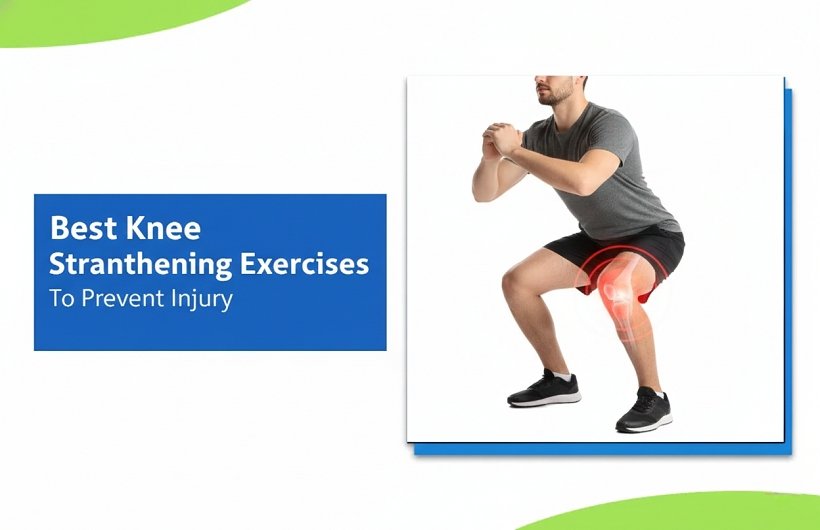
C. Wall Squats
How it helps: Strengthens thighs and glutes, which support the knee.
How to do it:
- Stand with your back against a wall and feet shoulder-width apart.
- Slowly slide down as if sitting on a chair (keep knees aligned with toes).
- Hold for 10–15 seconds and rise back up.
- Do 8–10 reps.
D. Calf Raises
How it helps: Strengthens calf muscles, which keep knees stable.
How to do it:
- Stand straight, holding a chair for support.
- Lift your heels off the ground and rise onto your toes.
- Pause for 2 seconds, then lower.
- Repeat 15–20 times.
E. Step-Ups
How it helps: Mimics everyday knee movement to build strength.
How to do it:
- Use a step or sturdy platform.
- Step up with one foot, then bring the other up.
- Step down in the same order.
- Do 10–12 steps on each leg.
F. Leg Press (If Using Gym Equipment)
How it helps: Works the quadriceps, hamstrings, and glutes.
How to do it:
- Sit at the leg press machine with feet shoulder-width apart.
- Push the platform with your feet until your legs are almost straight.
- Slowly return to the start.
- Do 10–15 reps.
2. How Often Should I Do These Exercises?
For best results:
- Start with 3–4 days per week.
- Do 2–3 sets of each exercise.
- Rest between sets if you feel tired.
If you feel sharp or increasing knee pain, stop and consult an Orthopaedic Doctor in Ahmedabad.
3. Should I Warm Up Before Knee Exercises?
Yes! Warming up increases blood flow and prepares your muscles:
- March in place for 3–5 minutes.
- Do gentle knee bends or light walking.
A warm-up helps reduce the risk of injury during exercise.
4. Can These Exercises Prevent Knees from Getting Injured?
Yes. Strengthening the muscles around your knee improves stability and reduces the risk of:
- Knee sprains
- Torn ligaments
- Runner’s knee
- Overuse injuries
Consistent knee strengthening can also slow down the effects of ageing on your joints.
5. Do I Need Special Equipment?
Not always. Many exercises can be done with:
- A chair
- A step or platform
- Resistance bands (optional)
- Gym machines (optional)
Begin with simple exercises at home, and use equipment only if comfortable.
6. Can I Do These Exercises If I Already Have Knee Pain?
Most gentle exercises are safe for mild knee pain, but you should:
- Consult a Knee specialist surgeon near you or an Orthopedic Doctor in Ahmedabad
- Avoid high-impact activities like running on hard surfaces
- Stop if you feel sharp or worsening pain
Dr. Samip Sheth often emphasises that proper form matters more than the number of repetitions. Doing exercises incorrectly can make pain worse.
7. When Should I See a Knee Specialist?
You should make an appointment with a knee specialist surgeon near you if you experience:
- Persistent knee pain lasting more than a few weeks
- Swelling or stiffness
- Locking or instability of the knee
- Pain that affects daily activities
A specialist can evaluate your knee, recommend personalised exercises, and suggest treatments if needed.
8. What Are Common Mistakes to Avoid?
Doing Too Much, Too Soon
Start slowly and increase intensity over weeks.
Ignoring Pain
If pain increases during exercise, stop and consult a doctor.
Poor Form
Incorrect posture can reduce benefits and cause injury.
Skipping Warm-Up
Never skip a warm-up before exercising.
9. How Long Until I See Improvement?
Improvement depends on your starting condition:
- Some people feel stronger in 2–4 weeks
- Noticeable stability and reduced pain often occur in 6–8 weeks
- Consistency is key
If you don’t see improvements after consistent effort, it’s best to get a professional assessment.
10. Can Weight Loss Help Knee Strength?
Yes. Reducing excess weight lowers pressure on your knee joints, making exercises more effective and reducing pain.
Summary
Weak knees can be uncomfortable and limit your daily life. However, knee-strengthening exercises such as straight-leg raises, hamstring curls, wall squats, and calf raises can make your knees stronger, more stable, and less prone to injury.
Always focus on proper form, start slowly, and increase gradually. If you have existing knee pain or injuries, consult a Knee specialist doctor in Ahmedabad or an Orthopedic Doctor in Ahmedabad first. A Knee specialist surgeon near you can guide your exercise plan and ensure your knees stay healthy and pain-free.
Dr. Samip Sheth stresses that simple, consistent exercises are often the key to long-term knee health. With the right approach, you can strengthen your knees, reduce pain, and enjoy daily activities with confidence.