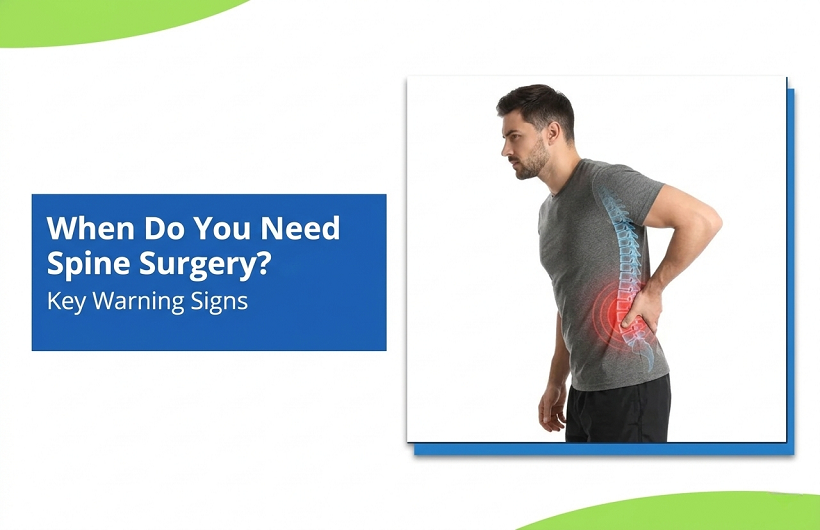
Back or neck pain is very common today. Long sitting hours, poor posture, injuries, and age-related wear and tear can all affect the spine. In most cases, pain improves with rest, medicines, physiotherapy, and lifestyle changes. However, sometimes the pain does not go away and may even become worse. That is when you may need to consider spine surgery treatment.
If you are confused about whether your condition requires surgery, this guide will help you understand the warning signs you should never ignore.
1. When Should You See a Spine Surgery Doctor Near You?
Many patients delay visiting a specialist, thinking the pain will settle on its own. While mild back pain often improves within a few weeks, certain symptoms indicate that you should consult a spine surgery doctor near you immediately.
Persistent Pain for More Than 6–8 Weeks
If your back or neck pain continues despite medicines, rest, and physiotherapy, it could indicate a deeper issue like a slipped disc, spinal stenosis, or nerve compression. Long-standing pain that affects daily life is not normal and needs expert evaluation.
Pain Spreading to Arms or Legs
If you feel shooting pain, tingling, numbness, or weakness in your arms or legs, it may mean that a spinal nerve is compressed. Conditions like a herniated disc can press on nerves and cause sciatica-like symptoms. Ignoring this may lead to permanent nerve damage.
Difficulty Walking or Standing
If you notice imbalance, weakness in the legs, or difficulty walking even short distances, it may be due to spinal canal narrowing (spinal stenosis). This is a serious warning sign.
Loss of Bladder or Bowel Control
This is a medical emergency. Sudden difficulty in controlling urine or stool can be a sign of severe nerve compression. Immediate medical attention is required.
If you experience any of these symptoms, consulting an experienced specialist like Dr. Samip Sheth, an expert in orthopaedic and spine conditions, can help you get the right diagnosis and treatment at the right time.
2. What Conditions May Require Spine Surgery Treatment?
Not all spine problems need surgery. In fact, most patients improve with non-surgical care. However, surgery may be recommended in certain situations.
Herniated (Slipped) Disc
When the soft cushion between vertebrae slips out and presses on nerves, it can cause severe pain and weakness. If conservative treatments fail after several weeks, spine surgery may be advised.
Spinal Stenosis
This condition involves narrowing of the spinal canal, which puts pressure on the spinal cord or nerves. If symptoms like leg pain, numbness, and walking difficulty worsen over time, surgery may provide relief.
Spine Fractures
Spine fractures can occur due to accidents, falls, or sports injuries. In severe cases, surgery may be required to stabilise the spine. If the injury is sports-related, consulting a sports injury specialist in Ahmedabad is important for proper management.
Degenerative Disc Disease
With age, spinal discs lose flexibility and height. When this leads to severe pain and nerve compression that doesn’t respond to other treatments, surgical options may be considered.
Spinal Deformities
Conditions like scoliosis or abnormal spinal curvature may need surgical correction if they cause pain, breathing difficulty, or functional problems.
As an experienced orthopedic doctor in Ahmedabad, Dr. Samip Sheth carefully evaluates each patient before recommending surgery. Surgery is usually considered only when non-surgical treatments fail or when there is a risk of permanent nerve damage.
3. How Do You Know If Surgery Is the Right Option for You?
Many patients are afraid of spine surgery, and that is completely understandable. However, modern spine surgery treatment techniques are much safer and more advanced than before.
Here are a few factors doctors consider before recommending surgery:
Severity of Symptoms
If your pain is severe, disabling, and affecting your quality of life, surgery may help you return to normal activities.
Failure of Conservative Treatment
If you have tried medications, physiotherapy, lifestyle changes, and injections without improvement for several weeks or months, surgery may be the next step.
Imaging Results
MRI or CT scans help doctors see if there is nerve compression, disc damage, or structural problems. Surgery is usually recommended only if imaging findings match your symptoms.
Risk of Permanent Damage
If there is progressive weakness, increasing numbness, or loss of bladder/bowel control, early surgery can prevent long-term complications.
An experienced spine surgery doctor near you will discuss all options, benefits, and risks before deciding. The goal is always to choose the safest and most effective treatment.
What Are the Benefits of Timely Spine Surgery?
When done at the right time and for the right reasons, spine surgery can offer:
- Significant pain relief
- Improved mobility
- Better nerve function
- Return to daily activities
- Improved quality of life
Delaying necessary surgery can sometimes lead to worsening symptoms and slower recovery.
Dr. Samip Sheth focuses on patient-centred care, ensuring that surgery is recommended only when truly needed. As a trusted orthopaedic doctor in Ahmedabad, he emphasises proper diagnosis, clear communication, and personalised treatment plans.
When Should You Not Ignore Back Pain?
You should never ignore back or neck pain if:
- Pain is getting worse instead of improving
- There is weakness in the arms or legs
- You experience numbness or tingling
- You have difficulty walking
- There is sudden loss of bladder or bowel control
- Pain follows a serious injury or accident
In such cases, early consultation with a sports injury specialist doctor in Ahmedabad or a spine expert can prevent complications.
Final Thoughts
Back and neck pain are common, but persistent or severe symptoms should never be ignored. While most spine problems improve without surgery, certain warning signs clearly indicate the need for expert evaluation.
Spine surgery treatment is not the first option, but it can be life-changing when recommended at the right time. If you are experiencing ongoing pain, nerve symptoms, or difficulty in daily activities, do not delay seeking help.
Consulting a qualified specialist like Dr. Samip Sheth can help you understand whether surgery is necessary or if other treatments can resolve your condition. Early diagnosis and timely care can make a significant difference in your recovery and long-term spine health.