Hip pain can quietly take over your life, making it hard to walk, climb stairs, or even sleep through the night. When medicines and physiotherapy stop helping, hip replacement surgery in Ahmedabad may be the most effective step toward a pain-free, active life again. As an orthopedic doctor in Ahmedabad, I have seen how the right information and the right timing can completely change a patient’s recovery experience. This guide will walk you through everything from knowing when surgery is needed to what your recovery will look like week by week.
When Is Hip Replacement Surgery Actually Needed?
Most patients who come to me have been dealing with hip pain for months, sometimes years. They have tried painkillers, physiotherapy, and lifestyle changes, and yet the pain keeps coming back.
Hip replacement is typically recommended when:
- Severe hip pain limits daily activities like walking, dressing, or getting up from a chair
- Pain persists even at rest or disturbs sleep
- Hip stiffness makes it difficult to lift or move the leg
- X-rays confirm significant cartilage damage or bone-on-bone contact
- Conservative treatments have failed to provide lasting relief
The most common cause is osteoarthritis, where the cartilage cushioning the hip joint gradually wears away. Other causes include rheumatoid arthritis, avascular necrosis (loss of blood supply to the hip bone), and hip fractures in older adults.
If any of these sounds familiar, you do not have to keep managing the pain. A consultation can help you understand exactly where you stand.
Types of Hip Replacement Surgery
Not every patient needs the same procedure. The right type depends on your age, the extent of damage, and your activity level.
Total Hip Replacement
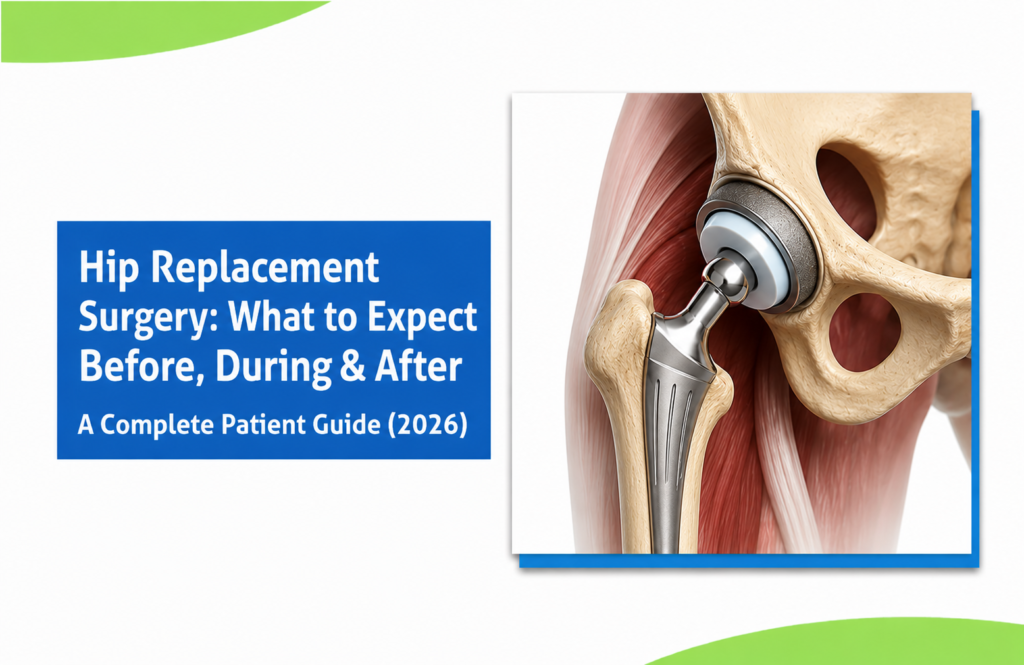
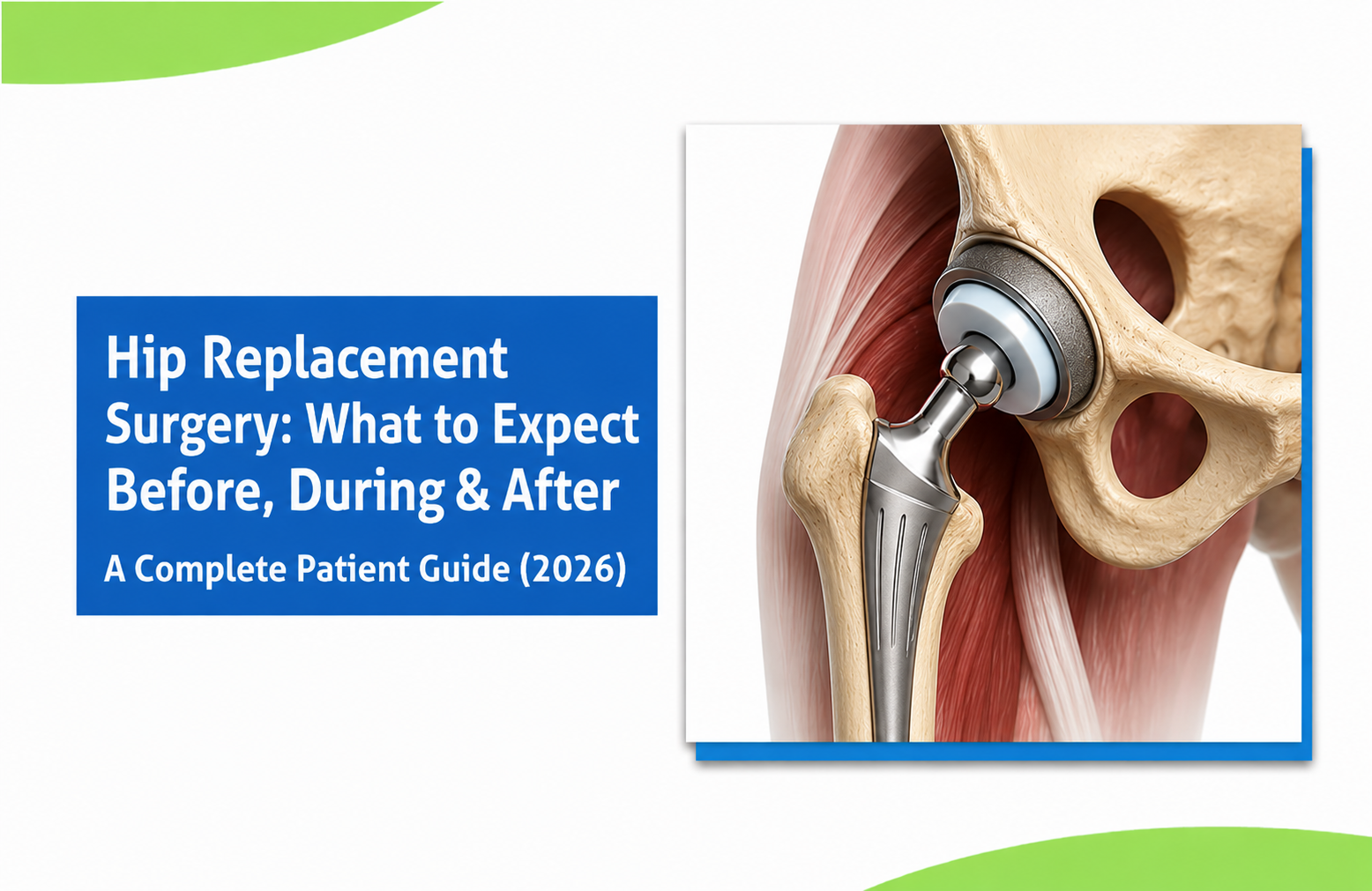
The entire hip joint, both the ball (femoral head) and the socket (acetabulum), is replaced with an artificial implant. This is the most common type and works well for advanced arthritis or severe fractures.
Partial Hip Replacement
Only the damaged portion of the joint is replaced, usually the ball. This is often used for certain types of hip fractures, especially in older patients.
Minimally Invasive Hip Replacement
This uses smaller incisions than traditional surgery. It causes less tissue damage, reduces blood loss, and typically leads to a faster recovery. It requires a highly experienced surgeon and is not suitable for every patient.
The choice of implant material, metal, ceramic, or high-grade plastic, is also decided based on your lifestyle and overall health.
What Happens During Hip Replacement Surgery?
The surgery is usually performed under spinal or general anesthesia and takes roughly 1.5 to 2.5 hours.
Here is what happens step by step:
- Incision: A small incision is made over the hip joint to access it.
- Removal: The damaged femoral head (ball) and the worn socket lining are carefully removed.
- Implant placement: An artificial socket is fitted into the pelvis, and a metal stem with a new ball is inserted into the femur (thigh bone).
- Closure: The incision is closed, and the dressing is applied.
Most patients are up and walking with assistance within 24 hours of surgery. Early movement is not just encouraged; it is essential to prevent blood clots and speed up recovery.
Hip Replacement Recovery: Week-by-Week Timeline
Recovery after hip replacement is very manageable when patients know what to expect. A similar planned approach is used in total joint replacement recovery as well.
Week 1–2: Hospital and Early Home Recovery
- Hospital stays: typically, 3 to 5 days
- You will stand and walk with support the day after surgery
- Physiotherapy begins immediately to restore strength and movement
- Pain is managed well with medication; most patients are surprised at how comfortable they feel
Week 3–6: Building Strength
- Walking improves significantly; most patients reduce dependence on a walker or cane
- Light exercises help strengthen the hip muscles
- Avoid crossing your legs, bending deeply at the hip, or sitting on low surfaces
Month 2–3: Resuming Daily Life
- Most patients can climb stairs comfortably by the 2-month mark
- Driving usually resumes between 2 to 3 months after surgery (for left hip replacement, often sooner)
- Return to desk work or light activities is typically possible by 6 to 8 weeks
Month 3–6: Full Recovery
- Most patients feel the full benefit of surgery, walking freely, sleeping without pain, and enjoying activities they had given up
- Hip implants today last 15 to 20 years or longer with proper care
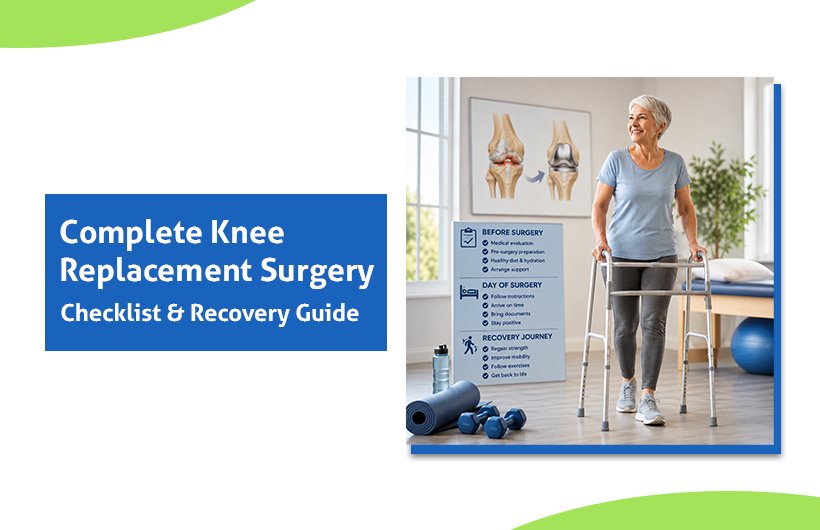
For patients who have already gone through a knee replacement surgery checklist, the recovery principles for hip replacement are quite similar: rest, physiotherapy, and gradual return to activity.
How to Prepare Your Home Before Hip Surgery
This is the part most patients overlook, and it makes a huge difference in your first two weeks at home.
Before surgery, make these simple adjustments:
- Move frequently used items to waist height so you do not need to bend or stretch
- Remove loose rugs, cables, and floor clutter that could cause a fall
- Install grab bars in the bathroom if possible; a raised toilet seat also helps
- Arrange a firm chair with armrests for sitting, avoid soft sofas or low seats
- Keep a phone charger, water bottle, and medication within easy reach of your bed
A little preparation goes a long way toward a smooth, safe recovery at home.
Hip Replacement Surgery Cost in Ahmedabad
Cost is one of the first questions patients ask, and that is completely understandable.
Hip replacement surgery cost in Ahmedabad generally depends on:
- Type of surgery: Total, partial, or minimally invasive
- Implant choice: Indian vs. imported implants; ceramic vs. metal
- Hospital and surgeon: Facility charges, anesthesia, physiotherapy
- Patient condition: Any existing health conditions that add complexity
Most health insurance plans, including government schemes, now cover hip replacement surgery. It is worth checking your policy and discussing a detailed cost estimate during your consultation so there are no surprises.
Why Experience and Expertise Matter in Hip Replacement Surgery
Hip replacement is one of the most technically demanding procedures in orthopedics. The outcome, how well you walk, how long the implant lasts, and how smoothly you recover, depends heavily on the skill and experience of your surgeon.
Dr. Samip Sheth is an Arthroscopy and Joint Replacement Surgeon based in Ambawadi, Ahmedabad, with advanced training and hands-on experience in total and partial hip replacement surgeries. He consults at Marengo CIMS Hospital, one of Ahmedabad’s leading multi-specialty hospitals, and at his Joint Specialty Clinic in Ambawadi.
When choosing your surgeon, look for someone who:
- Has dedicated fellowship training in joint replacement
- Regularly performs hip replacement procedures (volume matters for outcomes)
- Take time to explain your options and answer your questions clearly
- Has access to modern implants and an experienced surgical team
Choosing the right surgeon in Ahmedabad is as important as choosing the right procedure.
Conclusion
Hip replacement surgery has helped millions of people walk freely again, and with the right surgeon and the right preparation, it can do the same for you. Whether you are just beginning to explore your options or are ready to schedule your surgery, expert care from a joint replacement doctor in Ahmedabad makes all the difference. If pain is stopping you from living fully, it is time to have a conversation with an orthopedic specialist in Ambawadi who understands your needs and your goals.
Ready to Take the First Step Toward a Pain-Free Hip?
If hip pain limits your daily life, you do not have to wait any longer. Book an appointment with Dr. Samip Sheth at his Joint Specialty Clinic in Ambawadi, Ahmedabad, or chat with us on WhatsApp for a quick, no-fuss consultation.
Frequently Asked Questions
Q: At what age is hip replacement surgery recommended?
A: There is no fixed age. Hip replacement is recommended based on pain severity and joint damage, not age. Many patients in their 50s and 60s undergo it successfully. Your surgeon will assess whether you are ready based on your X-rays and overall health.
Q: How long does a hip replacement implant last?
A: Modern hip implants typically last 15 to 20 years or more. Factors like body weight, activity level, and implant material influence longevity. Most patients do not need a second surgery (revision) within their lifetime if they follow post-operative care guidelines.
Q: Will I be able to walk normally after hip replacement surgery?
A: Yes, in fact, most patients walk better than they have in years. Walking begins within 24 hours of surgery with support. By 3 months, most patients walk without aids and resume normal daily activities.
Q: Is hip replacement surgery painful?
A: The surgery itself is performed under anesthesia, so you feel nothing. Post-surgery discomfort is well-managed with medication, and most patients are surprised that the pain is far less than expected. The chronic hip pain before surgery is often much worse than the surgical recovery.
Q: What activities should I avoid after hip replacement?
A: For the first 6 to 12 weeks, avoid crossing your legs, deep squatting, bending past 90 degrees at the hip, and high-impact activities. Your physiotherapist will give you a specific list tailored to your procedure.
Q: Can both hips be replaced at the same time?
A: In some cases, yes, a bilateral hip replacement is possible. However, it depends on your overall health, age, and fitness. Your surgeon will advise whether a staged approach (one hip at a time) or simultaneous replacement is better for you.