
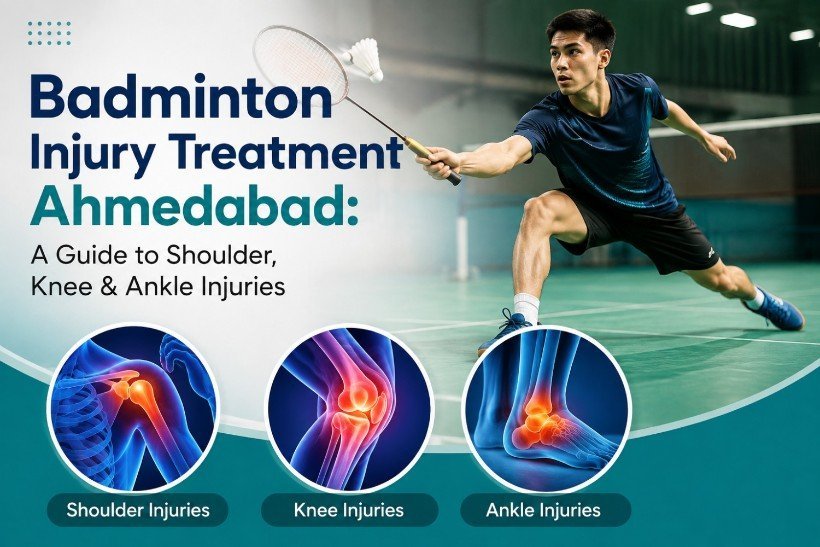
Badminton looks gentler than cricket or football, but the sport is built on sudden lunges, sharp direction changes, and repeated overhead smashes. That combination puts real strain on the shoulder, knee, and ankle, and it’s exactly why we see a steady stream of badminton players in the clinic who assumed a “light” sport wouldn’t cause a real injury.
Badminton has become one of the most widely played sports across Ahmedabad’s community canters, apartment complexes, and corporate leagues. As an orthopaedic surgeon in Ahmedabad, we’ve noticed this rise in participation come with a rise in overuse and acute injuries too, and most of them respond well to timely sports injury management if caught early.
Why Badminton Injury Treatment Ahmedabad Is Increasingly Needed
Badminton demands explosive, repetitive movement in a small court space. Players lunge forward and sideways dozens of times a match, jump for smashes, and rotate the shoulder overhead repeatedly. Unlike a steady jog, these are high-load, high-speed movements performed on joints that often haven’t been warmed up properly, especially among weekend and recreational players who play once or twice a week without conditioning in between.
This stop-start, twist-heavy nature is exactly what makes badminton injury treatment a recurring need rather than a rare event for regular players.
The Most Common Badminton Injuries We Treat
Shoulder pain and rotator cuff strain.
Repeated overhead smashes and clears put significant stress on the rotator cuff, especially with poor technique or an already-tight shoulder. Left unaddressed, this can progress into a chronic overuse injury, a pattern we’ve covered in detail in our guide on rotator cuff injuries in athletes.
Ankle sprains.
The most common acute badminton injury. Quick lateral lunges and sudden stops put the ankle ligaments under sharp stress, and a rolled ankle during a lunge is one of the most frequent reasons players end up needing badminton injury treatment mid-season.
Knee pain and ligament strain.
Sudden pivoting and lunging load the knee joint at awkward angles, which can strain the ligaments or aggravate existing tracking issues. If you’ve noticed pain specifically during lunges or direction changes, it’s worth reading our piece on knee pain while squatting, since the underlying mechanics are similar.
Tennis elbow and wrist strain.
The repetitive wrist snap used for smashes and drop shots can inflame the tendons around the elbow and wrist over time, especially with an incorrect grip or a racquet that’s too heavy for the player.
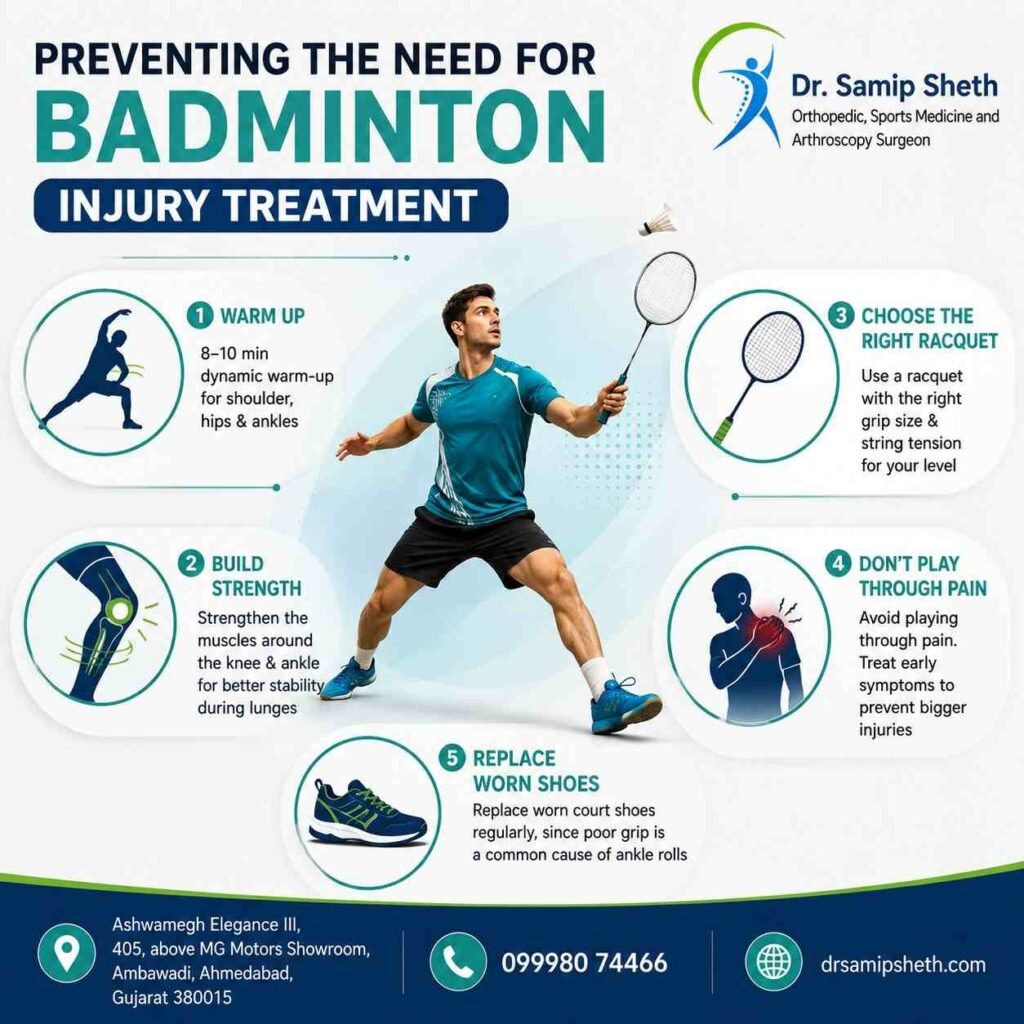
Preventing the Need for Badminton Injury Treatment
Most badminton injuries are preventable with a few consistent habits:
- Warm up for at least 8 to 10 minutes before playing, including dynamic stretches for the shoulder, hips, and ankles
- Strengthen the muscles around the knee and ankle to improve joint stability during lunges
- Use a racquet with the right grip size and string tension for your skill level
- Avoid playing through pain, since a minor strain ignored for a few sessions often turns into a longer-term injury
- Replace worn court shoes regularly, since poor grip is a common cause of ankle rolls
When to Seek Badminton Injury Treatment
Occasional muscle soreness after a match is normal. See a specialist if you notice:
- Swelling, bruising, or visible deformity around a joint
- Pain that doesn’t improve after several days of rest
- A joint that feels unstable, locks, or gives way during movement
- Sharp pain during overhead shots or lunges rather than general fatigue
- Reduced range of motion in the shoulder or ankle
If any of these apply, it’s worth getting evaluated by Dr. Samip Sheth rather than continuing to play through it, since untreated ligament and tendon injuries tend to take longer to heal the more, they’re aggravated.
The Bottom Line
Badminton is a fast, joint-intensive sport, and the shoulder, knee, and ankle bear most of that load. Warming up properly, strengthening the supporting muscles, and not playing through pain go a long way in preventing injury, and getting timely badminton injury treatment when something feels wrong keeps a minor strain from becoming a long-term problem.
If you’re dealing with a badminton-related injury that isn’t improving, contact us or chat with us on WhatsApp to book a consultation.
Expert Orthopedic Care for Every Step You Take
Whether you’re dealing with a sports injury, knee pain, shoulder pain, ligament tear, or persistent joint discomfort, early diagnosis can prevent long-term damage. Consult Dr. Samip Sheth, an experienced Orthopedic and Sports Injury Specialist in Ahmedabad, for expert evaluation and personalized treatment.
Frequently Asked Questions
Q: Can I keep playing badminton with a mild ankle sprain?
A: It’s best to rest and get it assessed first. Playing on an unstable ankle increases the risk of a more serious ligament tear and can turn a short recovery into a much longer one.
Q: How long does badminton shoulder pain take to heal?
A: Mild rotator cuff strain often improves within 2 to 4 weeks with rest, physiotherapy, and technique correction. Persistent pain beyond that should be evaluated further.
Q: Is badminton safe for people with existing knee problems?
A: It can be, but the lunging and pivoting involved does place extra stress on the knee. Anyone with a prior knee injury should get a proper assessment before returning to competitive play.
Q: Do I need surgery for a badminton injury?
A: Most badminton injuries, including sprains, strains, and mild tendon irritation, are treated successfully with rest, physiotherapy, and activity modification. Surgery is only considered for significant ligament tears or injuries that don’t respond to conservative treatment.
Q: What’s the best way to prevent recurring ankle sprains from badminton?
A: Ankle strengthening exercises, proper court shoes, and taping or bracing during play significantly reduce repeat sprains, especially for players who’ve rolled the same ankle before.
Q: Should beginners worry about badminton injuries as much as competitive players?
A: Beginners are more prone to injury, often due to poor technique, inadequate warm-up, and unfamiliarity with sudden directional movement. Learning correct form early helps prevent most common injuries.
Disclaimer: This blog is for informational purposes only and does not constitute medical advice. Please consult Dr. Samip Sheth or a qualified orthopaedic specialist for diagnosis and treatment tailored to your condition.