
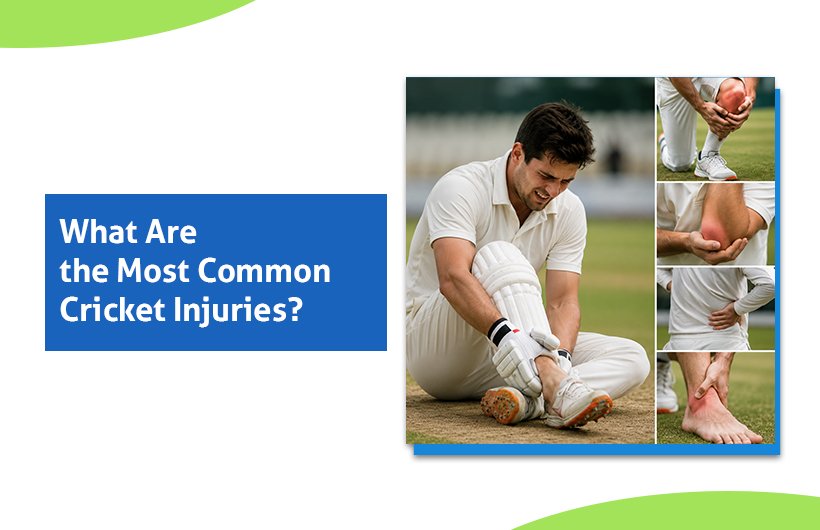
Cricket may not involve tackles or constant collisions, but it still takes a heavy toll on the body. Bowling, sprinting between wickets, and diving to field can all lead to painful injuries. If you’re dealing with pain after a match, consulting a Sports Injury specialist in Ambawadi can help you recover safely and get back on the field.
This guide covers the most common cricket injuries, what causes them, and how proper Sports Injury Treatment in Ahmedabad can help you heal faster.
What Is the Biggest Injury in Cricket?
Among all cricket injuries, lower back injuries in fast bowlers are considered the most serious. The bowling action places repeated, high-impact stress on the lumbar spine.
Studies show that nearly half of young fast bowlers develop signs of lumbar stress over time. Left untreated, this can affect a player’s career, not just a single season.
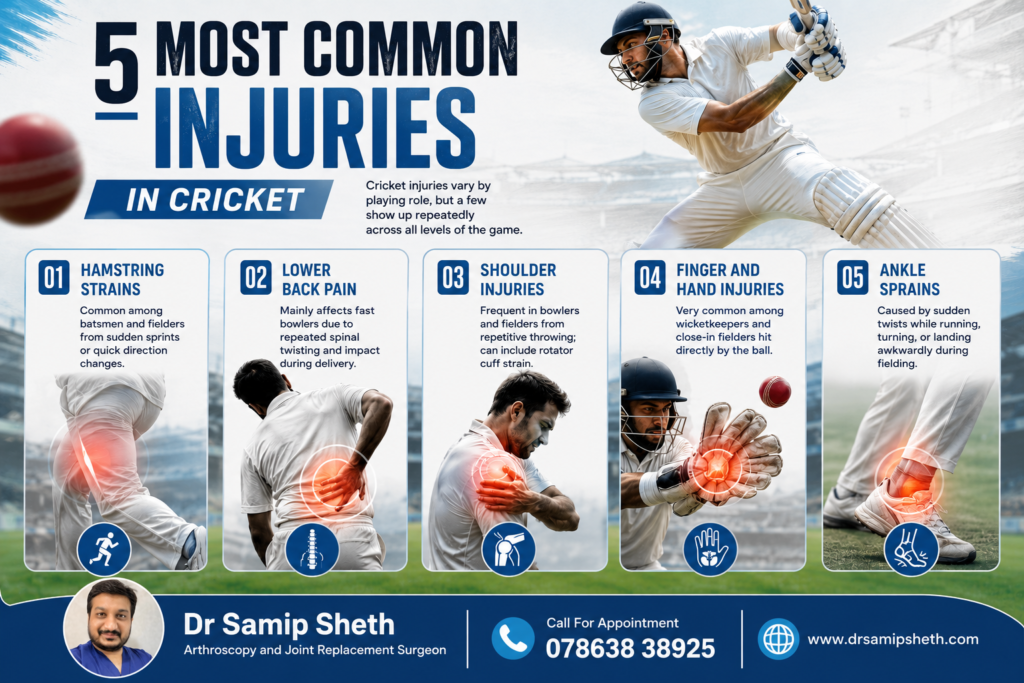
5 Most Common Injuries in Cricket
Cricket injuries vary by playing role, but a few show up repeatedly across all levels of the game.
- Hamstring Strains: Common among batsmen and fielders from sudden sprints or quick direction changes.
- Lower Back Pain: Mainly affects fast bowlers due to repeated spinal twisting and impact during delivery.
- Shoulder Injuries: Frequent fielders and bowlers from repetitive throwing; can include rotator cuff strain.
- Finger and Hand Injuries: Very common among wicketkeepers and close-in fielders hit directly by the ball.
- Ankle Sprains: Caused by sudden twists while running, turning, or landing awkwardly during fielding.
Cricket Injuries by Player Role
- Fast Bowlers: Lumbar stress fractures, shoulder strain, knee ligament strain from the landing stride
- Batsmen: Hamstring pulls, finger fractures, wrist pain from gripping and swinging the bat
- Fielders: Shoulder injuries, ankle sprains, finger injuries from catching
- Wicketkeepers: Finger and hand injuries are especially common due to repeated impact
For a wider look at injuries across sports, our blog on common sports injuries covers symptoms and treatment in more detail.
What Causes Cricket Injuries? (Risk Factors)
Most cricket injuries come down to a few avoidable risk factors:
- Overuse: Bowling too many overs without adequate rest between spells
- Poor technique: An improper bowling or batting action increases joint stress
- Skipping warm-up: Cold muscles and stiff joints are far more prone to strains
- Returning too soon: Playing again before a previous injury has fully healed
- Hard, uneven grounds: Increase the chance of ankle and knee injuries while running or fielding
Cricket Ball Impact Injuries
Direct impact from the ball is a separate category from overuse injuries, and it’s especially common in net practice and matches without full protective gear.
These usually include finger fractures, bruised ribs, hand contusions, and, in rarer cases, facial or head injuries. Wicketkeepers and close-in fielders like short leg or silly point face the highest risk.
Head Injuries and Concussions in Cricket
Head injuries, while less frequent than muscle or joint injuries, need to be taken the most seriously.
A blow from a fast-bowled ball or a collision while fielding can cause a concussion. Warning signs include headache, dizziness, confusion, nausea, or temporary memory loss.
Any player showing these symptoms should be removed from play immediately and assessed by a medical professional before being allowed to continue — even if symptoms seem mild at first.
Why Do Muscles Hurt After Playing Cricket for a Long Time?
If you’ve returned to cricket after months off and woke up sore the next day, this is usually Delayed Onset Muscle Soreness (DOMS), not an injury.
DOMS happens when muscles experience unfamiliar strain and develop tiny micro tears. It typically appears 24–48 hours after play and improves within 3–5 days with rest, hydration, and gentle stretching.
However, if the pain is sharp, located in a joint, or doesn’t improve after a few days, it could indicate a strain or ligament injury rather than simple muscle soreness. At that point, it’s best to get it checked rather than wait it out.
First Aid for Cricket Injuries on the Field
Quick action in the first few minutes after an injury can make a real difference to recovery time.
- Stop playing immediately: continuing to play on an injury often makes it worse
- Apply the R.I.C.E method: Rest, Ice, Compression, Elevation for sprains and strains
- Don’t force movement: especially with suspected fractures, dislocations, or head injuries
- Seek medical evaluation: for anything beyond mild, short-lived discomfort
How Are Cricket Injuries Treated?
Treatment depends on the type and severity of the injury.
- Mild strains and sprains: Rest, ice, compression, and elevation (R.I.C.E)
- Muscle and tendon injuries: Physiotherapy and gradual return-to-play programs
- Ligament tears (e.g., knee or ankle): Bracing, physiotherapy, or arthroscopic surgery in moderate to severe cases
- Finger fractures or dislocations: Splinting, immobilization, and sometimes minor surgical correction
Many knee-related cricket injuries, including ligament tears, may need a closer evaluation. You can learn more about diagnosis and recovery in our blog on ACL injuries.
When Can You Return to Cricket After an Injury?
Return-to-play timelines depend entirely on the injury, not just how the player feels.
- Muscle strains: Usually 1–3 weeks, once pain-free movement and strength return
- Ligament sprains: 3–6 weeks with physiotherapy and gradual loading
- Fractures or surgical repairs: 6–12 weeks, based on imaging and clinical clearance
Returning too early is one of the most common reasons cricket injuries become recurring problems.
Cricket Injuries in Young and School-Level Players
Growing bodies are more vulnerable to certain cricket injuries, particularly in fast bowlers under 18. Growth-plate stress and lumbar stress fractures are more common in young, developing players who bowl heavy workloads without proper monitoring.
Parents and coaches in Ahmedabad should watch for early signs like persistent back stiffness or reduced bowling speed, as these often appear before a clear injury does.
How to Prevent Cricket Injuries
A few simple habits go a long way in reducing injury risk for players in Ambawadi and across Ahmedabad:
- Warm up and stretch properly before every match or practice
- Build core and leg strength to support the spine and joints
- Avoid bowling excessive overs without adequate rest
- Use proper protective gear, especially for wicketkeepers and close fielders
- Don’t ignore early soreness; address it before it becomes a chronic problem
Cricket injuries are common, but most can be managed well with timely care. If you’re experiencing pain or recovering from an injury, contact us to book a consultation with Dr. Sami P. Sheth, an experienced orthopedic surgeon in Ambawadi, Ahmedabad.
You can also chat with us on WhatsApp for quick guidance on your injury.
Don’t Let Joint Pain Hold You Back
Whether you’re dealing with a sports injury, knee pain, shoulder pain, ligament tear, or persistent joint discomfort, early diagnosis can prevent long-term damage. Consult Dr. Samip Sheth, an experienced Orthopedic and Sports Injury Specialist in Ahmedabad, for expert evaluation and personalized treatment.
Frequently Asked Questions
Q: How long does it take to recover from a cricket injury?
A: Minor strains heal in 1–2 weeks, while ligament tears or fractures may take 6–12 weeks, depending on severity and treatment.
Q: Can I keep playing cricket with a minor injury?
A: Playing through pain can worsen a minor injury into a serious one. It’s safer to rest and get it evaluated first.
Q: Do all cricket injuries need surgery?
A: No. Most cricket injuries respond well to rest, physiotherapy, and a brace. Surgery is only needed for severe ligament tears or complex fractures.
Q: When should I see a doctor for a cricket injury?
A: See a doctor if you have severe pain, swelling that doesn’t reduce, joint instability, or symptoms lasting more than a few days.