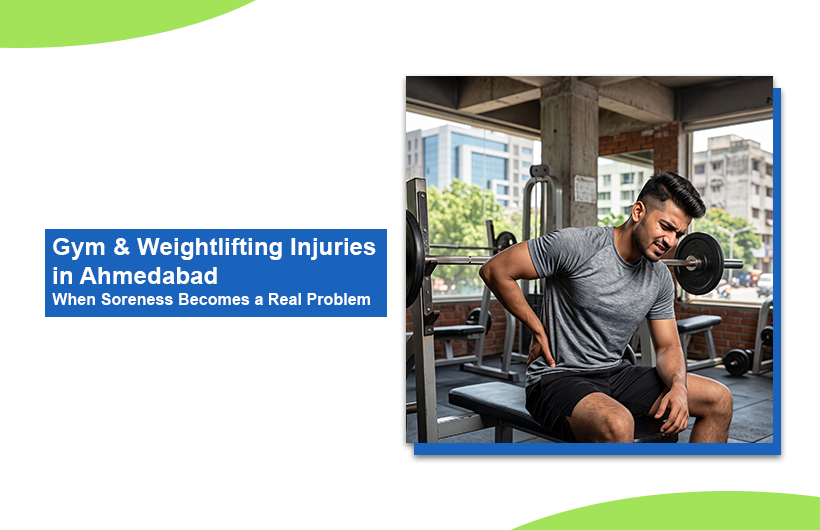
That deep ache in your shoulders after leg day is normal. A sharp pain in your lower back the moment you rack the bar is not. Most people who lift weights or train regularly eventually must answer one question: is this just soreness, or is something wrong?
Ahmedabad’s fitness culture has grown fast and so has the number of people training with heavier loads, tighter schedules, and, often, no formal coaching. As an orthopaedic surgeon in Ahmedabad, we’re seeing more gym-related injuries walk into the clinic than we did even a few years ago, and most of them were preventable. This guide covers what’s normal, what’s not, and when it’s time to stop pushing through and get it checked with proper sports injury management.
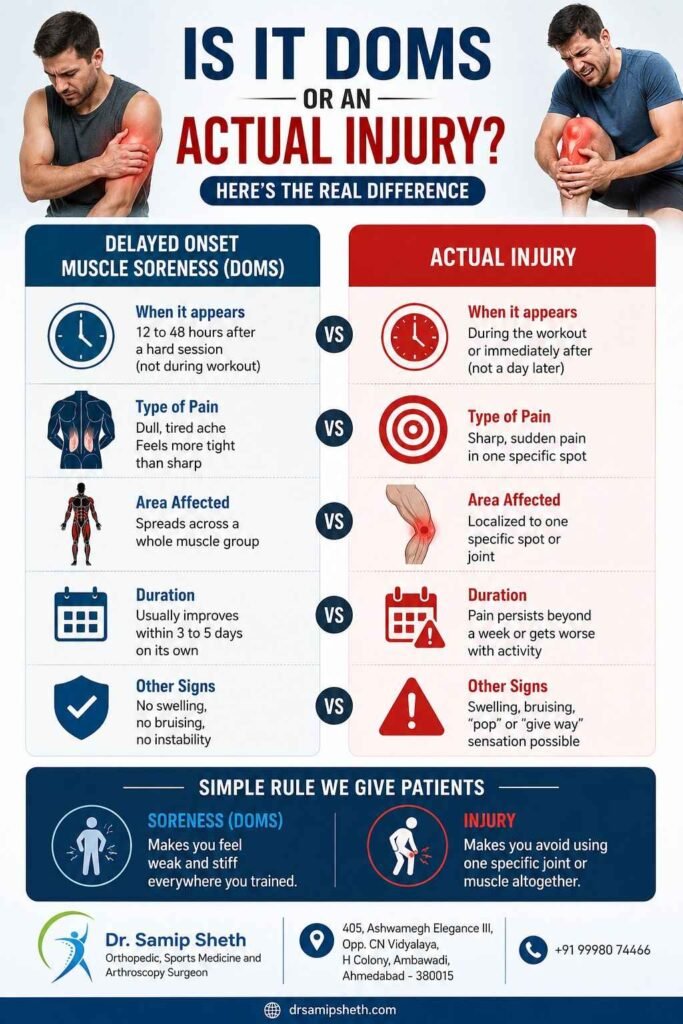
Is It DOMS or an Actual Injury? Here’s the Real Difference
Delayed Onset Muscle Soreness, or DOMS, is the dull, tired ache you feel 12 to 48 hours after a hard session, especially after trying a new exercise or pushing your volume up. It spreads across a whole muscle group, feels tight rather than sharp, and gets better on its own within 3 to 5 days.
An injury behaves differently. The pain is usually sharp, localized to one specific spot rather than a whole muscle group, and it can show up during the workout itself, not a day later. If you notice swelling, bruising, a “pop” or “give way” sensation, or the pain isn’t easing after a week, that’s not DOMS anymore, that’s your body telling you something structural is going on.
A simple rule we give patients: soreness makes you feel weak and stiff everywhere you trained. Injury makes you avoid using one specific joint or muscle altogether.
The Most Common Gym Injuries We See in Ahmedabad
Lower back strain from squats and deadlifts.
This is the single most common injury we treat from weight training. It usually comes from rounding the back under load, lifting too heavy too soon, or skipping a proper warm-up. Mild strains settle with rest and physiotherapy; a pain that shoots down the leg needs imaging to rule out disc involvement.
Shoulder impingement and rotator cuff irritation.
Overhead pressing, bench press with poor shoulder positioning, and high-volume pulling movements put repeated stress on the rotator cuff. Early signs include pain when raising the arm overhead or lying on that shoulder at night, a pattern we’ve also covered in our guide on home remedies for knee pain and other overuse conditions, where rest and load management matter as much as treatment.
Knee pain from squats and lunges.
Pain around or just below the kneecap during squats is often related to tracking issues or weak supporting muscles, not a structural tear. It generally responds well to targeted strengthening, our article on knee strengthening exercises is a useful starting point if this sounds familiar.
Elbow and wrist tendonitis.
Repetitive gripping, curls, and pressing movements can inflame the tendons around the elbow and wrist. This tends to build up over weeks rather than appear suddenly, which is exactly why people often ignore it until it becomes chronic.
Why This Is Becoming More Common in Ahmedabad
Ahmedabad’s gym and fitness scene has expanded quickly, with more people training for strength and aesthetics rather than general fitness alone. That shift brings heavier loads, more complex lifts like deadlifts and overhead presses, and, because gyms are often crowded during peak hours, less one-on-one form correction than lifters need.
Add to that a culture of following workout routines from social media without adjusting them for individual mobility or existing joint issues, and you get a steady stream of preventable strains and tendon injuries. None of this means you should stop training. It means form, progression, and recovery need to be taken as seriously as the workout itself.
When to Rest, and When to See a doctor
Most gym soreness resolves with rest, hydration, and light movement over a few days. See a doctor if you notice any of the following:
- Pain that doesn’t improve after 7 to 10 days of rest
- Sharp, localized pain during a lift rather than general soreness afterward
- Swelling, bruising, or visible deformity around a joint
- A joint that feels unstable, locks, or gives way
- Numbness, tingling, or pain radiating down an arm or leg
- Pain severe enough to change how you walk or use the limb
If any of these apply, it’s worth getting evaluated by Dr. Samip Sheth rather than waiting it out, since untreated tendon and ligament injuries tend to get harder to treat the longer, they’re ignored.
The Bottom Line
Soreness is part of training; a real injury is your body asking you to stop and get evaluated. Learning to tell the two apart, and adjusting your form and recovery, accordingly, is what keeps a training routine sustainable instead of turning into a cycle of setbacks.
If a gym injury isn’t improving with rest, contact us or chat with us on WhatsApp to book a consultation and get a clear plan to recover properly and get back to training.
Expert Orthopedic Care for Every Step You Take
Whether you’re dealing with a sports injury, knee pain, shoulder pain, ligament tear, or persistent joint discomfort, early diagnosis can prevent long-term damage. Consult Dr. Samip Sheth, an experienced Orthopedic and Sports Injury Specialist in Ahmedabad, for expert evaluation and personalized treatment.
Frequently Asked Questions
Q: How long should gym soreness last before I worry?
A: Normal DOMS peaks around day 2 and fades within 3 to 5 days. If pain persists beyond a week or gets worse instead of better, it’s time to get it checked.
Q: Can I keep training through mild soreness?
A: Yes, light movement and training different muscle groups is usually fine with DOMS. Training through sharp or localized pain, however, can turn a minor strain into a more serious injury.
Q: Is lower back pain from deadlifts always serious?
A: Not always, mild strains from poor form are common and usually improve with rest and physiotherapy. But pain that shoots down the leg, or persists beyond two weeks, needs proper evaluation.
Q: Do I need an MRI for every gym injury?
A: No. Most soft tissue strains are diagnosed on clinical examination alone. Imaging is reserved for cases with persistent symptoms, suspected ligament or tendon tears, or when initial treatment isn’t working.
Q: Should beginners worry more about gym injuries than experienced lifters?
A: Beginners are more prone to form-related injuries, but experienced lifters get injured too, usually from overtraining or skipping recovery. Injury risk is more about load management than experience level alone.
Q: Can physiotherapy alone fix a gym injury, or will I need surgery?
A: Most gym-related injuries, strains, tendonitis, mild impingement, respond well to physiotherapy and activity modification. Surgery is only considered for structural tears or cases that don’t improve with conservative treatment.
Medical Review Disclaimer: This article aims to provide general information about common gym and weightlifting injuries, their symptoms, prevention, and treatment options. It should not replace professional medical consultation. Anyone experiencing pain, discomfort, or injury should seek evaluation from a qualified orthopedic specialist to receive appropriate medical advice and treatment.