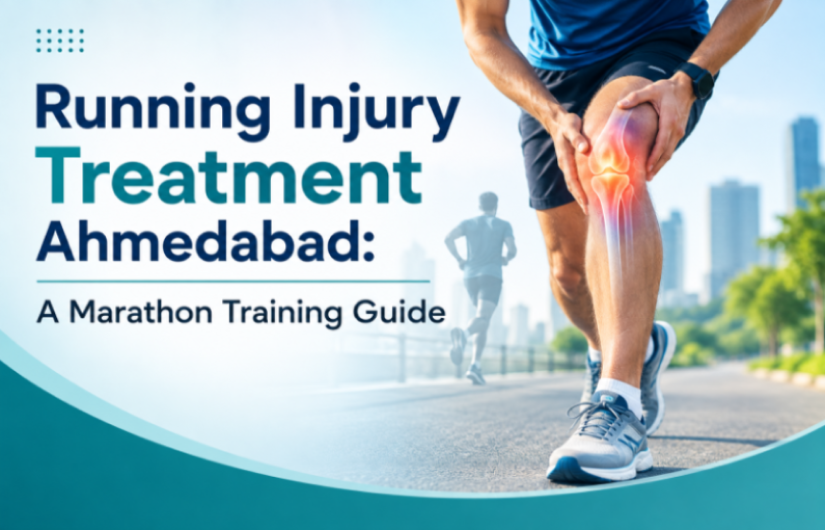
Every November, thousands of Ahmedabad residents lace up for the Adani Ahmedabad Marathon along the Sabarmati Riverfront, and this year’s 10th anniversary edition on November 29, 2026 is expected to draw another record crowd after last year’s 24,000-plus runners. Whether you’re training for the full 42K or your first 5K, the same question comes up constantly in the clinic during training season: how do you keep running without ending up needing running injury treatment halfway through your training block.
Running is a high-repetition, high-impact activity, and even small errors in training load or form add up over hundreds of kilometers. As an orthopedic surgeon in Ahmedabad, we see a predictable rise in training-related injuries every year in the run-up to marathon season, most of which are preventable with proper sports injury management and smart training habits.
Why Marathon Season Brings a Spike in Running Injury Treatment Cases
Most running injuries aren’t caused by one bad step, they build up gradually from training errors: increasing weekly distance too quickly, skipping strength work, running in worn-out shoes, or ignoring early warning pain because a race date is approaching. With a 12-week training window before a marathon, it’s easy to push volume up faster than your joints and tendons can adapt, which is exactly when we start seeing more people needing running injury treatment in Ahmedabad.
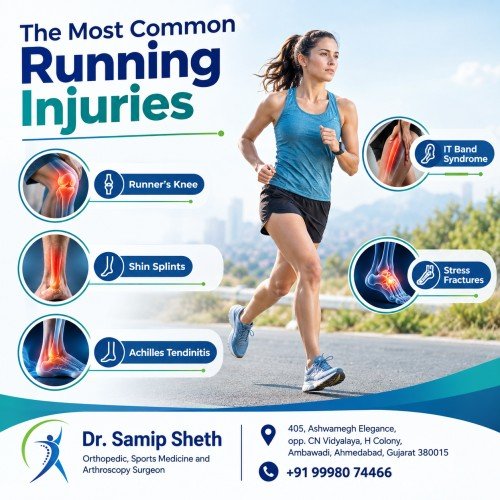
The Most Common Running Injuries We Treat
Runner’s knee. Pain around or behind the kneecap, especially during or after running, downhill sections, or long periods of sitting. It’s one of the most frequent reasons runners seek treatment and is often linked to weak hip and thigh muscles rather than the knee joint itself. Our guide on knee pain while squatting covers similar tracking issues that overlap with this condition.
Shin splints. A dull, aching pain along the shinbone that typically appears when training volume increases too quickly, especially on hard surfaces like Ahmedabad’s paved riverfront paths.
Achilles tendinitis. Stiffness and pain at the back of the ankle, often worse in the morning or at the start of a run. This tends to build gradually and gets worse with continued high-mileage training if ignored.
IT band syndrome. A sharp pain on the outside of the knee that typically shows up during longer runs, caused by friction from a tight iliotibial band rubbing against the knee joint.
Stress fractures. A more serious overuse injury that develops from repeated impact without adequate recovery. Persistent, localized bone pain that worsens with activity and doesn’t improve with rest needs prompt evaluation rather than continued training.
6 Proven Tips to Avoid Needing Running Injury Treatment
- Follow the 10 percent rule. Avoid increasing your weekly running distance by more than about 10 percent from the previous week. This single habit prevents a large share of overuse injuries.
- Invest in proper running shoes. Worn-out or unsuitable shoes are one of the most common preventable causes of shin splints and knee pain among Ahmedabad’s growing runner community.
- Add strength training, not just mileage. Weak hips, glutes, and core muscles are behind many running injuries. Building strength alongside your running plan, similar to the approach in our sports injury prevention plan, significantly reduces injury risk.
- Don’t skip rest days. Recovery is when your body actually adapts to training stress. Running every single day during marathon prep often does more harm than good.
- Watch your running surface. Alternating between the riverfront path, softer tracks, and occasional treadmill sessions reduces repetitive impact on the same joints and tendons.
- Don’t run through sharp or localized pain. General muscle fatigue is normal. Sharp, specific pain that doesn’t ease as you warm up is a signal to stop and get it checked rather than push through it.
When to Seek Running Injury Treatment
Mild post-run soreness usually resolves within a day or two. See a specialist if you notice:
- Pain that persists or worsens over several training sessions
- Pain that changes how you walk, not just how you run
- Swelling or localized tenderness over a bone rather than a muscle
- Pain that appears earlier and earlier into each run
- Any pain that doesn’t improve with a few days of rest
If any of these apply, especially close to race day, it’s worth getting evaluated by Dr. Samip Sheth rather than hoping it resolves on its own, since untreated overuse injuries tend to get significantly harder to manage the longer training continues on top of them.
The Bottom Line
Marathon training rewards consistency, not speed of progress. Building mileage gradually, strengthening the muscles that support your joints, and addressing pain early are what actually get most runners to the start line injury-free, and getting timely running injury treatment when something feels wrong protects your training instead of derailing it.
If you’re dealing with a running-related injury during your training, contact us or chat with us on WhatsApp to book a consultation with Dr. Samip Sheth.
Expert Orthopedic Care for Every Step You Take
Whether you’re dealing with a sports injury, knee pain, shoulder pain, ligament tear, or persistent joint discomfort, early diagnosis can prevent long-term damage. Consult Dr. Samip Sheth, an experienced Orthopedic and Sports Injury Specialist in Ahmedabad, for expert evaluation and personalized treatment.
Frequently Asked Questions
Q: How do I know if my knee pain is serious or just normal running soreness?
A: General muscle fatigue after a run is normal and improves with rest. Pain that’s sharp, localized, or persists beyond a few days, especially around the kneecap, warrants proper evaluation.
Q: Can I keep training for my marathon with mild shin splints?
A: It’s best to reduce mileage and address the underlying cause first. Continuing to train through shin splints can progress toward a stress fracture, which requires much longer recovery time.
Q: How long does Achilles tendinitis take to heal?
A: With rest, proper stretching, and load management, mild cases often improve within a few weeks. Persistent stiffness beyond that should be assessed to rule out a more significant tendon issue.
Q: Is it normal for new runners to get injured while training for their first marathon?
A: First-time marathon runners are actually at higher risk of injury, usually from increasing mileage too quickly. A structured, gradual training plan significantly lowers this risk.
Q: Do I need an MRI for a running injury?
A: Not usually. Most running injuries are diagnosed through clinical examination. Imaging is reserved for cases with persistent pain, suspected stress fractures, or when initial treatment isn’t working.
Q: Should I stop training completely if I’m dealing with a minor running injury?
A: Not always. Many running injuries can be managed with modified training, such as reduced mileage or cross-training, while allowing the affected area to recover, though this should be guided by a proper evaluation.
Disclaimer: This blog is for informational purposes only and does not constitute medical advice. Please consult Dr. Samip Sheth or a qualified orthopedic specialist for diagnosis and treatment tailored to your condition.