
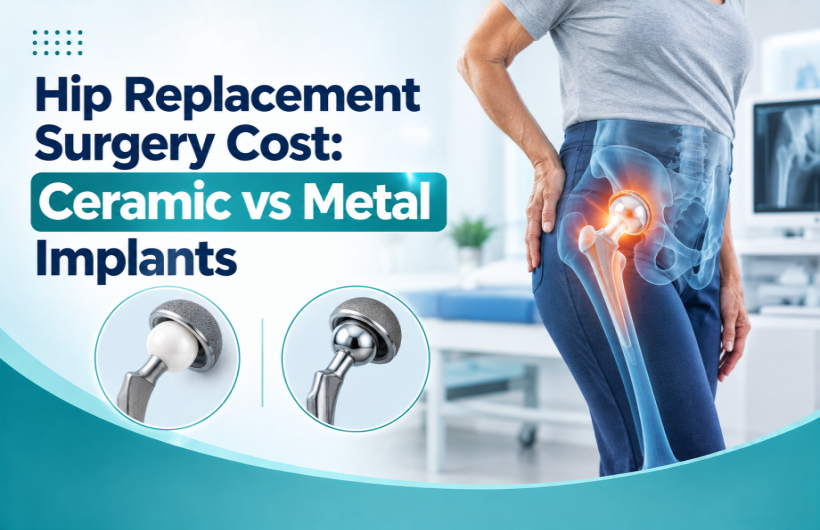
The Hip Replacement Surgery Cost depends on the type of implant, hospital charges, surgeon’s fees, and the patient’s medical condition. Ceramic and metal implants are commonly used in hip replacement surgery, but the right choice depends on several factors, including bone health, age, activity level, and the design of the artificial joint. Ceramic components may cost more in some treatment packages, but a higher price does not always mean a better outcome. Understanding the implant options and the costs involved can help you plan your treatment with confidence.
If you are considering hip replacement surgery in Ahmedabad, understanding the procedure and available implant options is an important first step.
What Is the Hip Replacement Surgery Cost in Ahmedabad?
The Hip Replacement Surgery Cost in Ahmedabad varies from one hospital to another. The final price depends on the implant selected, the type of surgery, hospital facilities, and the patient’s overall health.
Publicly listed estimates for hip replacement surgery in Ahmedabad range from approximately ₹2.8 lakh to ₹5.5 lakh. This is an indicative range based on third-party listings, not a confirmed quotation from Dr. Samip Sheth’s clinic. Actual prices may differ depending on the treatment plan and what the hospital package includes.
The main factors affecting the total cost are:
- Implant material: Ceramic, metal, and different bearing combinations may have different prices.
- Implant brand: Indian and imported implant systems may have different costs.
- Type of surgery: Partial and total hip replacement have different requirements.
- Hospital charges: Room category, nursing care, and length of stay affect the bill.
- Professional fees: Surgeon, anaesthesia, and surgical team fees contribute to the cost.
- Additional care: Investigations, medicines, physiotherapy, and follow-up visits may add to the total.
Ceramic vs Metal Implants: What Is the Difference?
A hip implant replaces the damaged parts of the hip joint with artificial components. In a total hip replacement, the damaged ball of the thigh bone and the damaged surface of the hip socket are replaced.
The artificial joint usually contains a stem, a ball, a socket, and a bearing surface that allows the joint to move smoothly. These components can be made from different materials and used in different combinations.
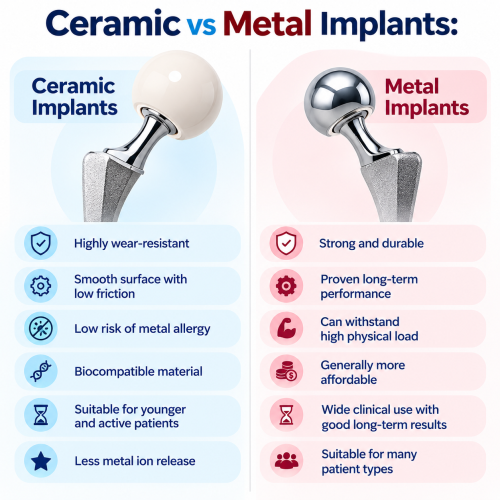
For example, a hip replacement may use a ceramic ball with a plastic liner or a metal ball with a plastic liner. Therefore, the choice is not always simply between a completely ceramic implant and a completely metal implant.
| Feature | Ceramic bearing | Metal bearing |
| Common combinations | Ceramic-on-polyethylene or ceramic-on-ceramic | Metal-on-polyethylene or, in selected cases, metal-on-metal |
| Wear | Ceramic bearing surfaces generally have low wear | Wear depends on the metal and the material it moves against |
| Cost | May cost more in some implant combinations | Some conventional combinations may cost less |
| Main consideration | Wear properties, implant design, and rare ceramic fracture | Wear, corrosion, and the type of bearing combination |
| Suitability | Depends on the patient’s condition and implant design | Depends on the component, bearing surface, and patient factors |
The implant choice should be based on clinical needs, not price alone.
You can read about the 7 signs for hip replacement to understand when an assessment may be useful. These signs do not automatically mean that surgery is necessary.
What Are the Benefits of Ceramic Hip Implants?
Ceramic is a hard material used for the moving surfaces of some artificial hip joints. It has low wear characteristics, which makes it a useful option in suitable implant designs.
1. Low Wear Characteristics
Ceramic bearing surfaces generally have low wear when used in appropriate combinations. This can help reduce the release of wear particles from the bearing surface.
However, implant longevity also depends on positioning, fixation, patient activity, and other factors. Ceramic does not guarantee that an implant will last longer in every patient.
2. Smooth Bearing Surface
Ceramic has a smooth, hard surface that can support movement within the artificial joint. It may be used with a plastic liner or another ceramic surface, depending on the implant design.
3. Suitable Options for Different Patients
Ceramic bearings may be considered for patients who need a durable bearing surface. The final decision depends on bone quality, age, activity level, anatomy, and the surgeon’s assessment.
Ceramic components can fracture, although this is uncommon with modern designs. Your surgeon can explain the benefits and limitations of the specific implant being recommended.
For more information about the procedure, read the complete guide to hip replacement surgery. It explains when surgery may be needed, the procedure, and the recovery process
What Are the Benefits and Risks of Metal Hip Implants?
Metal components are widely used in hip replacement surgery. The stem and outer socket shell are commonly made from metal, even when the moving surface uses ceramic or plastic.
1. Strength and Structural Support
Metal components provide strength and support within the artificial joint. Their design and fixation method are selected according to the patient’s bone condition and surgical requirements.
2. Different Implant Combinations
Metal can be combined with different bearing materials. For example, a metal ball can move against a plastic liner in a metal-on-polyethylene implant.
This is different from a metal-on-metal implant, where both moving surfaces are metal.
3. Important Safety Considerations
Metal-on-metal bearings can release metal particles and ions because of wear and corrosion. In some patients, these may cause damage to the tissues surrounding the joint.
For this reason, metal-on-metal implants have specific safety concerns and are generally avoided in routine total hip replacement. Patients should ask their surgeon which bearing combination is being recommended and why.
How Much Does a Ceramic Implant Cost Compared With a Metal Implant?
The Hip Replacement Surgery Cost can change according to the implant material, brand, design, and treatment package.
Ceramic components may increase the implant cost in some cases. However, there is no single price difference that applies to every hospital or implant system.
Before comparing quotations, check what each package includes.
| Cost component | What you should check |
| Implant | Brand, model, material, and implant components |
| Bearing combination | Ceramic-on-polyethylene, ceramic-on-ceramic, or metal-on-polyethylene |
| Surgery | Partial or total hip replacement |
| Hospital stay | Room, nursing, and hospital services |
| Professional fees | Surgeon, anaesthesia, and surgical team |
| Recovery care | Medicines, physiotherapy, and follow-up appointments |
Ask the hospital for an itemised quotation. It should identify the proposed implant and explain which services are included or charged separately.
A lower initial price may not include every expense, while a higher package may include additional services. Comparing the complete treatment plan gives you a clearer picture of the actual cost.
What Other Factors Affect Hip Replacement Surgery Cost?
Implant material is only one part of the total expense. The type of surgery and the patient’s medical needs also play an important role.
Type of Hip Replacement
In a total hip replacement, the damaged ball and socket surfaces are replaced. In a partial hip replacement, only the ball is replaced, while the natural socket is retained.
The choice depends on the underlying condition and the extent of joint damage. These procedures have different implant and treatment requirements, which can affect the final price.
Implant Brand and Design
Different manufacturers offer different implant systems. Their prices may vary according to the design, materials, manufacturing process, and other features.
Ask your surgeon which implant is suitable for your condition and why. Do not choose an implant based only on its brand name or price.
Hospital Facilities and Length of Stay
Hospital charges can include the operating theatre, room, nursing, medicines, and routine investigations. The length of the hospital stay and any additional medical care can change the final bill.
Existing Medical Conditions
Some patients need additional investigations or medical treatment before surgery. Others may require closer monitoring after the procedure.
These requirements can increase the total treatment cost.
Physiotherapy and Follow-Up
Recovery does not end when you leave the hospital. Physiotherapy, medicines, walking aids, and follow-up visits may also contribute to the overall expense.
When calculating your Hip Replacement Surgery Cost, ask whether these services are included in the package.
How Should You Choose Between Ceramic and Metal Implants?
The most suitable implant depends on your individual needs. Your orthopaedic surgeon will consider several factors before recommending a particular implant.
Age and Activity Level
A younger, more active patient may have different long-term implant requirements from an older patient with limited mobility. However, age alone does not determine which implant is best.
Bone Quality and Hip Anatomy
The strength of your bone, the shape of the joint, and the extent of damage affect the implant design and how it is fixed to the bone.
Overall Health
Your general health and any existing medical conditions may influence the treatment plan. Your surgeon may also consider whether you have had previous hip surgery.
Long-Term Safety and Durability
Your surgeon should explain the expected benefits, possible complications, and long-term considerations of the recommended implant.
The most expensive implant is not automatically the best option. The goal is to choose an implant that suits your condition and provides an appropriate balance of safety, function, and durability.
How Long Does a Hip Replacement Implant Last?
Modern hip replacement implants are designed to last for many years. However, their lifespan varies from patient to patient.
Factors that affect implant longevity include:
- Implant design and bearing materials.
- Correct implant positioning and fixation.
- Bone quality and overall health.
- Body weight and activity level.
- Wear, loosening, infection, or other complications.
- Regular follow-up and appropriate care.
Many modern implants can last 15–20 years or longer, but this is not a guarantee for every patient. Some implants may need revision surgery if they become loose, wear out, or develop a complication.
Your surgeon can explain the expected lifespan of the proposed implant and the follow-up required.
Does Health Insurance Cover Hip Replacement Surgery?
Many health insurance policies cover medically necessary hip replacement surgery, subject to the policy terms and approval process.
Before surgery, check the following with your insurer and hospital:
- Whether hip replacement is covered under your policy.
- Whether the hospital is part of your insurer’s network.
- Whether pre-authorisation is required.
- Whether the implant or room category has specific limits.
- Whether deductibles, co-payments, or exclusions apply.
Ask for a written estimate showing the expected amount payable by you after insurance. Do not assume that every implant upgrade or additional service will be covered.
When Should You Consult a Hip Replacement Surgeon in Ahmedabad?
You should consider an orthopaedic assessment if persistent hip pain affects your walking, climbing stairs, sleeping, or other daily activities.
Hip replacement may be recommended when the joint is severely damaged and non-surgical treatments no longer provide enough relief. The decision depends on your symptoms, physical examination, imaging results, and overall health.
If your hip pain started after a sports-related injury, an assessment through the sports injury management service may help determine the cause and the appropriate treatment.
If you are considering surgery, discuss your symptoms, implant options, and complete treatment estimate during an joint replacement Surgeon. This will help you understand which option is suitable for your needs and budget.
Expert Orthopedic Care for Every Step You Take
Consult Dr. Samip Sheth, an experienced Orthopedic and Sports Injury Specialist in Ahmedabad, for expert evaluation and personalized treatment.
Reference URLs for this blog
- National Institute of Arthritis and Musculoskeletal and Skin Diseases (NIAMS): Hip Replacement Surgery
- Credihealth: Hip Replacement Cost in Ahmedabad
Medical Disclaimer: This article is for general educational purposes only and is not a substitute for professional medical advice, diagnosis, or treatment. Implant suitability and treatment costs vary between patients and hospitals. Consult a qualified orthopaedic surgeon before making decisions about hip replacement surgery.