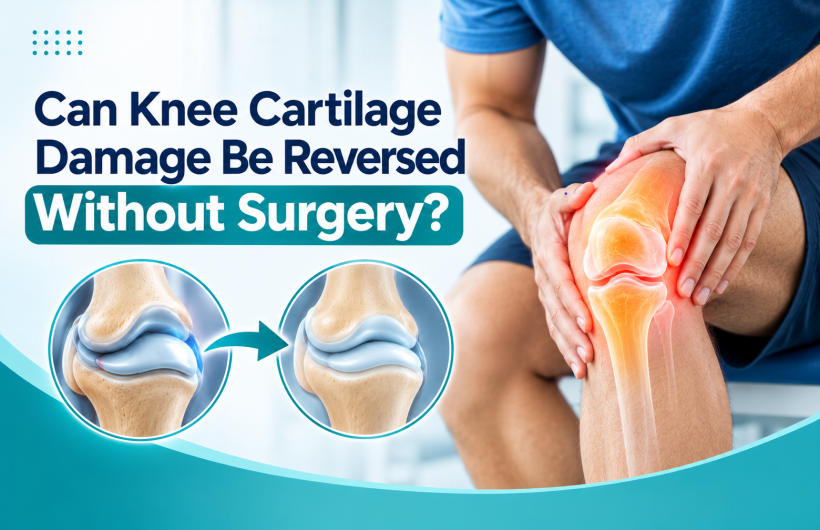
Knee Arthroscopy Surgery in Ahmedabad may be considered for selected knee cartilage injuries, but surgery is not necessary for every patient. The answer to whether knee cartilage damage can be reversed without surgery depends on the type of cartilage affected and the severity of the injury. Physiotherapy, activity modification and other non-surgical treatments can improve knee function and reduce pain. However, damaged articular cartilage has limited natural healing ability, so symptom improvement does not always mean the cartilage has regenerated.
What Is Knee Cartilage and Why Is It Important?
Cartilage is a smooth, flexible tissue that protects the ends of bones inside the knee joint. It helps the bones move smoothly against each other and reduces friction during activities such as walking, running, bending and climbing stairs.
There are two important cartilage structures in the knee.
Articular cartilage: This smooth tissue covers the ends of the thighbone, shinbone and the back of the kneecap. It allows the joint surfaces to move smoothly.
Meniscus: Each knee has two menisci. These crescent-shaped structures sit between the thighbone and shinbone. They act as shock absorbers and help distribute pressure across the joint.
Although both are commonly called knee cartilage, they are different structures. Their healing abilities and treatment options are also different.
Can Knee Cartilage Damage Be Reversed Without Surgery?
In most cases, damaged articular cartilage cannot completely regenerate to its original condition through natural healing alone. This is because articular cartilage does not have a direct blood supply, which limits its ability to repair itself.
However, this does not mean that every patient with cartilage damage needs surgery.
Many patients can manage their symptoms with non-surgical treatment. Physiotherapy, muscle strengthening, weight management and changes to certain activities can help reduce pressure on the affected area and improve knee movement.
The important difference is between managing cartilage damage and regenerating cartilage.
For example, a patient may experience less pain after physiotherapy because the muscles supporting the knee become stronger. The joint may become more stable, and everyday activities may become easier. However, the original cartilage defect may still be present.
The outcome also depends on whether the injury affects articular cartilage or the meniscus.
What Are the Different Types of Knee Cartilage Damage?
Understanding the type of injury helps explain why some cartilage problems can improve without surgery while others need further treatment.
1. Articular Cartilage Damage
Articular cartilage covers the bone surfaces inside the knee. It can become damaged due to sports injuries, direct impact, repeated stress or age-related degeneration.
Minor surface damage may cause few symptoms or may be managed with conservative treatment. Larger or deeper defects may cause persistent pain, swelling and difficulty with movement.
Unlike some other tissues, articular cartilage has a limited ability to repair itself naturally.
2. Meniscus Tear
A meniscus tear is another common form of knee cartilage injury. It can occur when the knee twists suddenly during sports or even during everyday movement.
Some meniscus tears, particularly those in the outer region with a better blood supply, may have a greater chance of healing. Other tears may not heal naturally and may require specialist assessment.
Treatment depends on the location and pattern of the tear, the patient’s age, symptoms and activity level.
What Are the Symptoms of Knee Cartilage Damage?
Symptoms can develop gradually due to wear and tear or appear suddenly after an injury.
Common symptoms include:
Persistent Knee Pain
You may experience pain while walking, climbing stairs, squatting or standing for long periods. The discomfort may increase after physical activity.
Swelling Around the Knee
Inflammation inside the joint can cause swelling. Some patients notice it a few hours after an injury or following exercise.
Stiffness and Reduced Movement
The knee may feel stiff after sitting for a long time or when getting up in the morning. Bending or straightening the knee may also become uncomfortable.
Clicking or Catching Sensation
Some patients experience clicking, grinding or catching while moving the knee. These symptoms can have several causes and do not automatically confirm cartilage damage.
Difficulty Walking or Climbing Stairs
As the condition progresses, everyday activities such as walking, climbing stairs, sitting cross-legged and getting up from a chair may become difficult.
Knee Locking or Giving Way
A patient may feel that the knee is getting stuck or suddenly giving way. These symptoms can occur with certain meniscus injuries or other problems inside the joint and should be evaluated.
What Causes Knee Cartilage Damage?
Knee cartilage can become damaged due to injury, repeated stress or gradual joint degeneration.
Sports Injuries
Sudden twisting, jumping, falling or direct impact can damage the cartilage or meniscus.
Sports such as cricket, football, badminton and running may increase the risk of knee injuries, particularly when they involve sudden changes in direction.
Age-Related Wear and Tear
As people grow older, cartilage may gradually become thinner and lose some of its ability to withstand pressure. This can contribute to osteoarthritis.
Previous Knee Injuries
A previous ACL injury, meniscus tear or knee fracture can affect joint stability and change how pressure is distributed across the knee.
Excess Body Weight
Additional body weight increases the mechanical load on the knee joints. This may aggravate existing cartilage problems and contribute to joint degeneration.
Repetitive High-Impact Activities
Repeated jumping, running and deep squatting may increase stress on the knee, particularly when the joint is already injured or painful.
How Is Knee Cartilage Damage Diagnosed?
Knee pain can result from several conditions, including cartilage damage, meniscus tears, ligament injuries and osteoarthritis. An accurate diagnosis is important before deciding on treatment.
An orthopaedic specialist may recommend the following assessments.
Physical Examination
The doctor will ask about your symptoms, previous injuries, physical activities and medical history.
The examination may include checking:
- Knee movement and flexibility
- Joint swelling and tenderness
- Knee stability
- Pain during bending and straightening
- Walking pattern and alignment
X-Ray
An X-ray helps assess bone alignment, joint space and signs of osteoarthritis.
However, standard X-rays do not directly show most cartilage injuries because cartilage is not visible in the same way as bone.
MRI Scan
An MRI provides detailed images of soft tissues inside the knee. It can help identify meniscus tears, ligament injuries and many forms of cartilage damage.
The MRI findings must be considered alongside your symptoms and physical examination. An abnormal MRI does not automatically mean that surgery is necessary.
How Can Knee Cartilage Damage Be Treated Without Surgery?
Many patients can initially be managed with non-surgical treatment, particularly when the injury is mild or symptoms are manageable.
The main goals are to reduce pain, improve knee movement, strengthen the muscles supporting the joint and help the patient return to daily activities.
1. Physiotherapy and Strengthening Exercises
Physiotherapy is an important part of managing many knee conditions.
A physiotherapist may recommend exercises to strengthen the quadriceps, hamstrings, hip muscles and other muscles that support the knee.
Depending on the injury, exercises may include:
- Straight leg raises
- Quadriceps strengthening
- Hamstring strengthening
- Gentle knee bending and straightening
- Hip strengthening exercises
- Low-impact stationary cycling
Stronger supporting muscles can improve knee stability and movement.
However, exercises should be selected according to the patient’s condition. Avoid continuing activities that cause significant pain or swelling.
2. Activity Modification
Temporary changes to your daily activities may help reduce stress on the affected knee.
Your doctor may advise limiting:
- Running and jumping during painful periods
- Deep squatting
- Repeated stair climbing
- Sudden twisting movements
- High-impact sports
This does not mean complete bed rest. Suitable low-impact activities may help maintain muscle strength and joint mobility.
3. Weight Management
Maintaining a healthy body weight can reduce the mechanical pressure placed on your knee joints.
If you are overweight, gradual weight reduction through a balanced diet and suitable physical activity may help improve symptoms and make everyday movement more comfortable.
4. Medicines for Pain and Inflammation
Depending on the diagnosis, your doctor may prescribe medicines to manage pain and inflammation.
Some patients may benefit from anti-inflammatory medication. However, these medicines are not suitable for everyone and may cause stomach, kidney or cardiovascular side effects.
Avoid taking painkillers regularly without medical advice.
5. Knee Braces and Support
In selected patients, a knee brace may help improve support or reduce pressure on a particular part of the joint.
The type of brace depends on the location of the injury, knee alignment and symptoms. It should be used as part of an overall treatment plan rather than as a replacement for diagnosis and rehabilitation.
6. Injections for Selected Patients
Certain patients may be considered for injections to help manage knee pain.
Depending on the condition, a specialist may discuss corticosteroid or other intra-articular injection options.
However, injections do not automatically regenerate damaged cartilage. Their benefits, limitations and possible risks vary.
For example, hyaluronic acid injections are not routinely recommended for symptomatic knee osteoarthritis by the American Academy of Orthopaedic Surgeons because consistent clinically meaningful benefits have not been demonstrated.
Always discuss the suitability of an injection with your treating doctor.
When Is Knee Arthroscopy Needed for Cartilage Damage?
Non-surgical treatment may not be sufficient for every patient.
If knee pain continues despite appropriate treatment, or if there is a specific cartilage defect or associated problem inside the joint, an orthopaedic specialist may consider surgery.
Knee arthroscopy is a minimally invasive procedure in which a surgeon uses a small camera and specialised instruments to examine and treat selected problems inside the knee.
Depending on the diagnosis, arthroscopic procedures may include:
- Assessing the condition of the joint cartilage
- Treating selected unstable cartilage fragments
- Managing certain meniscus tears
- Addressing associated ligament or joint problems
However, arthroscopy is not recommended for every patient with cartilage wear or knee osteoarthritis. For example, arthroscopic cleaning alone is generally not recommended for uncomplicated knee osteoarthritis.
The decision depends on the type of injury, severity of symptoms, cartilage condition, age and activity level.
Can Damaged Knee Cartilage Be Regenerated Through Surgery?
Although natural cartilage regeneration is limited, selected cartilage restoration procedures may help treat specific defects.
These procedures are not suitable for every patient. Their suitability depends on the size and location of the damaged area, the condition of the surrounding joint and the patient’s overall health.
Microfracture
In this procedure, small openings are created in the underlying bone to stimulate a healing response.
The repair tissue is generally fibrocartilage rather than the original type of smooth articular cartilage. The procedure is suitable only for selected patients.
Osteochondral Grafting
This procedure involves transferring cartilage and underlying bone tissue to a damaged area.
It may be considered for certain localised cartilage defects where the surrounding joint condition is suitable.
Autologous Chondrocyte Implantation
This technique involves collecting cartilage cells, growing them and implanting them into a suitable damaged area.
It is a specialised treatment and is not appropriate for every patient.
These procedures should not be confused with treating widespread cartilage loss caused by advanced osteoarthritis. The treatment approaches can be very different.
What Happens If Knee Cartilage Damage Is Left Untreated?
The outcome depends on the location, type and severity of the damage.
Some mild injuries may remain manageable with appropriate rehabilitation and activity modification. However, significant cartilage damage may continue to cause pain, swelling and difficulty with movement.
In some patients, cartilage damage can contribute to progressive joint degeneration and osteoarthritis.
Persistent pain may also reduce physical activity, leading to muscle weakness and reduced knee function.
Early medical assessment can help identify the underlying problem and determine whether non-surgical treatment is suitable.
Can You Prevent Further Knee Cartilage Damage?
Although not every cartilage injury can be prevented, certain habits may help protect your knee joints.
- Maintain a healthy body weight.
- Strengthen your quadriceps and hip muscles.
- Warm up before sports and exercise.
- Increase workout intensity gradually.
- Avoid sudden increases in running or jumping activity.
- Use appropriate footwear for physical activities.
- Allow enough recovery time after strenuous exercise.
- Seek assessment for persistent knee pain or swelling.
If you have already experienced a knee injury, follow a suitable rehabilitation programme before returning to high-impact activities.
When Should You Consult an Orthopaedic Specialist?
Do not ignore knee pain that continues to affect your daily activities.
Consider consulting an orthopaedic specialist if you experience:
- Knee pain that does not improve with rest or basic treatment
- Repeated swelling after walking or exercise
- Difficulty climbing stairs or squatting
- A catching or locking sensation inside the knee
- Pain following a sports injury or sudden twisting movement
- Reduced knee movement
- Difficulty bearing weight on the affected leg
Seek prompt medical assessment if you cannot walk or put weight on the leg, cannot bend or straighten the knee, have severe pain after an injury, or develop a hot, swollen knee with fever.
Conclusion
Knee cartilage damage does not always require surgery. Many patients can manage their symptoms and improve knee function through physiotherapy, activity modification, weight management and appropriate medical treatment.
However, damaged articular cartilage has limited natural healing ability. Improvement in pain does not necessarily mean that the original cartilage has regenerated.
The right treatment depends on the type and severity of the injury, the patient’s activity level and the overall condition of the knee. If you have persistent knee pain, swelling or difficulty walking, seek an orthopaedic assessment to understand your treatment options.
Consult Dr. Samip Sheth for Knee Cartilage Problems in Ahmedabad
When knee pain continues to affect walking, exercise or daily activities, an accurate diagnosis can help determine the most appropriate treatment.
Dr. Samip Sheth’s orthopaedic provides information about his work in arthroscopy, sports medicine and joint replacement. Patients can discuss their symptoms and treatment options through an individual clinical assessment.
For an overview of orthopaedic services and consultation information, visit the Best Orthopedic Surgeon in Ahmedabad website.
Expert Orthopedic Care for Every Step You Take
Consult Dr. Samip Sheth, an experienced Orthopedic and Sports Injury Specialist in Ahmedabad, for expert evaluation and personalized treatment.
Frequently Asked Questions
Can knee cartilage damage heal without surgery?
Some mild cartilage injuries can be managed without surgery. Physiotherapy, activity modification and weight management may help reduce symptoms and improve knee function. However, significant articular cartilage damage does not usually regenerate naturally.
Can walking make knee cartilage damage worse?
It depends on the severity and type of injury. Gentle walking may be suitable for some patients, but prolonged walking or walking through significant pain may aggravate symptoms. Follow your doctor’s activity recommendations.
Which exercises are good for knee cartilage damage?
Depending on the condition, straight leg raises, quadriceps strengthening, hamstring strengthening and low-impact cycling may be recommended. A physiotherapist should select exercises according to the injury and pain level.
Does an MRI confirm knee cartilage damage?
An MRI can help identify many cartilage injuries and associated problems inside the knee. However, the findings must be interpreted alongside symptoms and physical examination.
Does knee cartilage damage always lead to arthritis?
No. Not every cartilage injury progresses to arthritis. However, significant cartilage damage, particularly when combined with other joint injuries, may increase the risk of joint degeneration.
Is knee arthroscopy necessary for cartilage damage?
No. Many patients do not require surgery. Knee arthroscopy may be considered for selected injuries when the clinical findings support it and non-surgical treatment has not provided sufficient improvement.
Medical Disclaimer
This article is intended for general educational purposes only. It should not replace professional medical advice, diagnosis or treatment. Consult a qualified orthopaedic specialist for advice about your individual knee condition. Seek prompt medical attention for severe pain, inability to bear weight, a locked knee or a hot, swollen knee with fever.
Research References
- NHS – Meniscus Tear
- American Academy of Orthopaedic Surgeons – Articular Cartilage Restoration
- American Academy of Orthopaedic Surgeons – Arthritis of the Knee
- AAOS – Management of Osteoarthritis of the Knee
- Management of Acutely Traumatized Cartilage of the Knee – Narrative Review